How Long Should a Microwave Last?
A microwave often lasts about 7–10 years. Use, care, and repair history affect how long it remains useful, so judge its condition and any fault rather than age alone.
On this page (6 sections)
A microwave often lasts about 7–10 years, but how long it stays useful depends on use, care, and repair history. If you're asking how long should a microwave last, treat that range as a guide, then decide based on the oven's condition, safety, and repair cost.
A microwave that still works properly doesn't need replacing just because it has reached a certain age. A damaged door, repeated fault, or repair that costs too much for the appliance's condition can make replacement the better choice sooner.
How long should a microwave last in everyday use?
Many countertop microwaves last about 7–10 years. This is a general estimate, not a fixed deadline or a promise about a particular model.
An oven used several times a day gets more use than one reserved for occasional reheating. Spills, blocked vents, rough handling, and poor cleaning can also contribute to problems over time.
Think in terms of condition rather than a countdown. If it heats as expected, the door closes securely, and the controls work normally, age by itself may not be a reason to replace it.
What affects how long a microwave lasts?
Care, ventilation, and everyday habits can help prevent avoidable wear. Follow your model's manual for its specific clearances, cleaning steps, and cookware guidance.
- Keep the vents clear. Give the oven the space required by its manual so heat can escape.
- Clean spills promptly. Food residue can smoke or spark when you use the oven again.
- Use microwave-safe dishes. Check the manual before using cookware you aren't sure about.
- Don't run the oven empty. Use it as directed.
- Close the door gently. Slamming can damage the door or latch over time.
These habits can't promise a specific lifespan, but they help you avoid common mistakes. Check the inside and door from time to time so you notice damage or unusual behavior early.
What warning signs mean a microwave needs attention?
Stop using a microwave if the door, latch, or hinges are damaged, or if it sparks or smells like burning. Unplug it if you can do so safely, then contact the manufacturer or a qualified repair technician.
Other problems worth addressing include a turntable that stops moving, controls that behave unpredictably, or food that no longer heats as expected. Don't open the cabinet yourself, since internal parts can hold a dangerous electrical charge even after the oven is unplugged.
Uneven heating can sometimes relate to how you arrange food or use the oven. Check the manual for placement, stirring, and standing-time advice, and read our guide to why microwaves heat unevenly if the problem continues.
Can you repair an old microwave?
A repair can make sense when a qualified technician can fix a limited fault at a reasonable cost. Compare the estimate with a suitable replacement and consider the oven's age, condition, and how often it has needed attention.
Don't attempt a repair that requires opening the cabinet unless you're qualified. Stop using the microwave while a professional assesses damage to the door, latch, seals, or safety controls.
An older oven may still be worth repairing if the problem is simple and the rest of it works well. Repeated faults, worsening performance, or an expensive repair can point toward replacement.
How should you choose a replacement microwave?
Choose a microwave that fits your counter, cooking routine, and preferred controls. Measure the space, check the oven's exterior dimensions, and leave the ventilation clearance its manual requires.
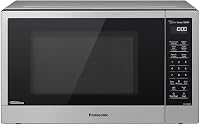
If you want sensor cooking and inverter technology, the Panasonic NN-SN67KS has a 1.2 cu ft capacity, 1200 watts, and 16 sensor cook settings. It suits someone who regularly reheats or cooks a range of foods and wants automatic adjustments; skip it if you only need a basic oven with simple presets.
For familiar buttons and presets, the BLACK+DECKER 1.1 Cu Ft 1000W Microwave has 10 power settings, a removable glass turntable, and six preset buttons. It fits a straightforward everyday routine; skip it if you want sensor-based adjustments.
The Sharp SMC1162KS offers a 1.1 cu ft capacity, 1000 watts, a carousel turntable, and weight and time defrost settings. It suits people who often thaw frozen food and want a quick-start option; skip it if you want sensor cooking.
The GE Compact 1.1 Cu Ft Microwave has one-touch express cooking, six convenience settings, and manual and auto defrost. Its listed clearance guidance calls for 3 in on each side and above, 1 in at the rear, and an unobstructed bottom; skip it if your counter can't provide that space.
Use our guide to choosing a countertop microwave to compare capacity, controls, and cooking needs. If even heating is a priority, see the best inverter microwaves.
Does wattage affect how long a microwave lasts?
Wattage alone doesn't determine how long a microwave lasts. It describes cooking power, while lifespan depends on use, care, and the oven's condition.
A higher-wattage model may reheat food faster, but it doesn't guarantee a longer working life. Compare wattage with your routine, counter space, and preferred features.
Our guide to how many watts a microwave uses explains what power means for cooking, and 700-watt versus 1000-watt microwaves compares two common power levels.
How do you decide whether to repair or replace?
Repair when a technician can safely fix a limited problem at a reasonable cost; replace when safety, repeated faults, or a costly repair point to a poor fit. Don't keep using an oven with door or safety damage while you weigh the options.
If the microwave works properly and shows no damage, age alone may not require replacement. Keep it clean, follow the manual, and ask a qualified technician about a new fault.
For the question of how long should a microwave last, the useful decision rule is simple: keep a safe, working oven; repair it when the fix makes sense; replace it when safety or repeated trouble outweighs its remaining usefulness. When you do replace it, choose for your space and cooking habits, then follow the manual's set-up and care instructions.
Frequently asked questions
How long should a microwave oven last?
A microwave oven often lasts about 7–10 years, though use, care, and repair history affect how long it remains useful. Age alone doesn't prove an appliance is unsafe or beyond repair.
Stop using it if the door or safety parts are damaged, and ask a qualified technician to assess faults.
Is a 10-year-old microwave safe to use?
A 10-year-old microwave isn't automatically unsafe, but inspect its door, hinges, seals, and controls. Stop using it if the door won't close securely, it sparks, or it runs with the door open, and contact a qualified repair technician.
Follow the manual for care and safety guidance.
Should I repair or replace an old microwave?
Compare a qualified repair estimate with the cost of a suitable replacement, while considering the microwave's age, condition, and fault. A simple, affordable repair can make sense; repeated problems or damage to the door or safety controls call for prompt professional advice.
What shortens a microwave's lifespan?
Poor ventilation, spills left inside, unsuitable cookware, and frequent heavy use can add strain or create avoidable problems. Follow the manual's clearance and cleaning instructions, keep vents clear, and use microwave-safe dishes.
Stop using the oven if you notice sparks, burning smells, or door damage.