Why Do Microwaves Heat Unevenly?
Microwaves heat unevenly because food absorbs energy at different rates. Thickness, moisture, placement, and cooking time can leave cold spots; stir, cover, rotate, and let food stand to even out the heat.
On this page (10 sections)
- Why do microwaves heat unevenly?
- What causes hot and cold spots in microwave food?
- How can you reheat food more evenly?
- Does inverter technology help with uneven heating?
- Can sensor cooking prevent uneven heating?
- Which microwave features help with uneven heating?
- How should you set up and care for a microwave?
- What mistakes leave food unevenly heated?
- When should you stop using a microwave that heats unevenly?
- How do you choose a microwave for more even heating?
Microwaves heat unevenly because food absorbs energy at different rates, so a plate can have hot edges and a cool center. Food thickness, moisture, starting temperature, and placement all affect the result, but stirring, covering, rotating, and standing time can make reheating more consistent.
A microwave feature can help, but it cannot replace good food arrangement. Inverter power suits lower-power cooking and defrosting, a turntable moves food around the cavity, and sensor cooking adjusts a cycle for some foods.
Why do microwaves heat unevenly?
Microwaves heat unevenly because energy does not warm every part of food at the same rate. Dense, thick, or tightly packed areas take longer to warm through than thin, moist portions.
A mound of rice may be hot around its rim while a compact clump stays cool. Break up the clump and stir so cooler food moves outward and warmer food moves toward the center.
Food straight from the refrigerator can also have different starting temperatures across one dish. Heat in shorter intervals, stir between them, and allow a brief stand so warmth can spread after the microwave stops.
What causes hot and cold spots in microwave food?
Food shape, density, moisture, placement, and cooking time all contribute to hot and cold spots. A deep serving heats less predictably than an even layer because its center is harder to reach with stirring and heat checks.
Does food shape change how evenly it heats?
Food shape matters because thick areas need more time to warm through. Spread food in a shallow layer when possible, and arrange pieces of similar size with space between them.
For ring-shaped foods, arrange portions around the edge of a microwave-safe dish and leave the center less crowded. Stir sauces, grains, and other foods that can be moved during heating.
Why does food heat more at the edges?
The outside of a portion can heat before its center, especially when the serving is large, dense, or cold. This is why a hot plate does not always mean every bite is ready.
Break up compact foods such as rice or mashed potatoes, then move food from the outer edge toward the middle as you stir. For solid pieces, turn or rearrange them partway through.
Can the dish or container affect microwave heating?
Yes. Use a microwave-safe dish that fits the food and rotates freely if your microwave has a turntable.
A dish that is off-center, too wide, or blocked against the cavity wall may not move as intended.
A deep container can make it harder to stir and check the center. Choose a shallow, roomy container when it suits the serving, and cover loosely with a microwave-safe lid that lets steam escape.
How can you reheat food more evenly?
For more even reheating, spread food in an even layer, cover loosely, stir or rearrange midway, and let it stand. Use shorter intervals when you are unsure how quickly a dish will warm.
- Put food in a microwave-safe dish with room to stir.
- Spread it out and separate thick pieces where possible.
- Cover loosely, leaving a vent for steam.
- Heat for a shorter interval, then stir or turn the food.
- Let it stand, then check several spots, including the center.
Follow package directions for prepared foods. For leftovers, USDA advises heating them to 165°F and allowing standing time before checking with a food thermometer.
Does inverter technology help with uneven heating?
Inverter technology provides a steadier level of cooking power at lower settings, which can help with delicate foods and defrosting. It does not ensure that every part of a thick serving heats evenly, so keep stirring and checking.
Traditional microwaves may cycle between full power and no power to reach a lower setting. Inverter models use a more consistent level of power, which can make low-power cooking more controlled.
Our guide to inverter microwaves for even heating compares models with this feature. If you are deciding how food moves through the cavity, see flatbed versus turntable microwaves.
Is a turntable or flatbed better for even heating?
A turntable moves food through different areas of the cavity, while a flatbed removes the rotating plate and leaves an open floor. Both designs still need proper food placement and stirring because the food itself heats at different rates.
The Sharp SMC1174KS pairs a flatbed interior with inverter technology and fits dishes up to 13.25 by 13 in. It suits people who want usable floor space without a turntable, but skip it if you prefer food to rotate automatically.
Measure your regular dishes before choosing a flatbed. Compare the layout in our guide to flatbed and turntable microwaves.
Can sensor cooking prevent uneven heating?
Sensor cooking can adjust cooking time and power based on moisture released by food, but it cannot guarantee even heat throughout a crowded dish or a thick portion. Stir or rearrange food when the cycle ends, then check the center.
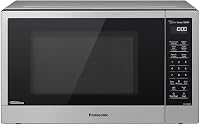
The Panasonic NN-SN65KB has Genius Sensor cooking and sensor reheat, plus a 13.4 in turntable. Its 1.2 cu. ft. capacity and sensor settings suit cooks who want automatic adjustments for common meals and leftovers.
Skip this model if you want an open flatbed floor or do not need sensor and auto-cook options. Learn what the feature does in our guide to sensor cooking on a microwave.
Which microwave features help with uneven heating?
Choose features that address the way you cook: inverter power for lower settings, a turntable for movement, or a sensor for automatic cycle adjustments. None removes the need to arrange food well and check thick portions.
The Emerson MWI1212SS has inverter technology, 10 power levels, and a removable glass turntable in a 1.2 cu. ft. cavity. It fits cooks who want adjustable power and a rotating dish, while shoppers who prefer sensor cooking should compare options with that feature.
More wattage can shorten cooking time, but it does not ensure an even result. See what microwave wattage tells you before choosing a power level for your routine.
How should you set up and care for a microwave?
Set the microwave on a stable countertop with enough room for the door and turntable to work freely. Check the appliance manual for placement and clearance requirements, then keep the cavity and turntable area free of food debris.
For a turntable model, seat the glass plate and roller ring correctly before use. Wipe spills after they cool, since dried food can make later cleaning harder and may interfere with the plate's movement.
A flatbed avoids a turntable to position, but still needs a clean cooking floor. Use only microwave-safe containers, and do not run the appliance empty.
What mistakes leave food unevenly heated?
The most common mistakes are heating a deep pile, skipping the midway stir, and serving food as soon as the timer ends. These habits leave little chance for cooler areas to move or warm through.
Avoid stacking pieces tightly or using a container so large that it cannot rotate. Do not assume a hot dish means the food is hot throughout; stir and check several areas, especially the center and thickest pieces.
For frozen food, use the defrost setting when available and separate pieces as they loosen. Cook or reheat afterward as needed, since thawing and warming can progress at different rates.
When should you stop using a microwave that heats unevenly?
Check the turntable, dish placement, and food arrangement first. If the turntable does not rotate, make sure it sits correctly on its support and can move without hitting the walls.
Try a different microwave-safe container and stir food partway through. If heating remains unusually inconsistent across different foods or the turntable still will not move, consult the manual or contact the manufacturer.
Uneven heating alone does not identify a specific fault. Do not open the appliance case, because internal components can be dangerous even when the microwave is unplugged.
How do you choose a microwave for more even heating?
Choose an inverter model if lower-power cooking and defrosting matter most, a turntable if you want food to rotate, and a flatbed if your dishes benefit from an open floor. Sensor cooking is useful when you want automatic cycle adjustments for common foods.
Pick the Panasonic for sensor cooking and a turntable, the Sharp for a flatbed layout, or the Emerson for inverter power with adjustable levels and a removable turntable. Skip the extra features if your main need is simple reheating; spreading food, stirring, and standing time remain the key steps.
For leftovers, follow the USDA guidance on leftovers and food safety. If you want to compare models built around steadier power, start with our inverter microwave comparison.
Frequently asked questions
Why does my microwave heat food unevenly?
Microwave energy warms different parts of food at different rates. Thickness, density, shape, moisture, starting temperature, and placement all matter, while a crowded cavity or short cooking time can leave cold areas.
Stir or rotate food when possible, cover it loosely, and let it stand before checking.
Does a turntable prevent uneven heating?
A turntable moves food through different areas of the microwave as it runs, which can help reduce uneven heating. It can't guarantee every bite reaches the same temperature, especially in thick portions.
Center the dish, use a suitable container, and pause to stir or rearrange food when you can.
Does inverter technology heat food more evenly?
Inverter technology can provide a steadier level of cooking power at lower settings, which may help with delicate foods and defrosting. The result still depends on the food, container, placement, and cooking time.
Stirring, rotating, and standing remain useful ways to even out the temperature.
How can I tell if reheated food is hot all the way through?
Stir or rearrange the food, then check several spots, including the center and thicker areas. For food safety, USDA advises heating leftovers to 165°F and letting them stand before checking.
Use a food thermometer rather than relying on steam or a warm plate.