Do Microwave Ovens Lose Power Over Time?
Yes, most microwave ovens lose some heating power over time. The magnetron that makes the microwaves weakens with age, and capacitors and door seals wear too. Output rarely drops overnight, though. It fades gradually over years of use.
On this page (10 sections)
- Do microwave ovens lose power over time?
- What actually wears out inside a microwave?
- What are the signs your microwave is losing power?
- Why does a microwave lose power as it gets older?
- Can you measure whether your microwave has lost power?
- When is a weak microwave worth repairing?
- Which microwaves keep their power and heat evenly?
- Inverter or traditional: which holds up better?
- What should you check before blaming the microwave?
- Bottom line
Do microwave ovens lose power over time? Yes, most do, though gradually.
The part that makes the microwaves, the magnetron, weakens with age, and some energy is lost along the way. The result is longer cook times and less even heating rather than a sudden failure.
The change is easy to miss at first. You just notice that the same bowl of soup needs another minute.
Knowing why it happens, and when to stop living with it, saves both time and guesswork.
Do microwave ovens lose power over time?
Yes, a microwave's usable heating power usually drops as it ages. A new oven delivers close to its rated wattage.
After years of use, less of that energy reaches the food.
Three things drive the fade. The magnetron loses efficiency, the high-voltage capacitor weakens, and the door seal lets a little energy escape.
Each one shaves a small amount off the total.
The drop is not linear. Output often stays steady for a long stretch and then declines more quickly.
That is why a 6-year-old oven can feel fine one month and sluggish the next.
Wattage on the label describes the unit when new. It is not a promise about output later in life.
So a "1200 watt" microwave that has aged still says 1200 watts on the box even when it heats more slowly.
What actually wears out inside a microwave?
The magnetron is the main wear part, because it generates the microwaves that cook your food. It works hard every time you press start, and its output declines over years.
The high-voltage capacitor and diode that feed the magnetron also age. So do the door seals, which keep the energy inside the cavity.
A worn seal means less energy reaches the food and more leaks around the door.
The turntable motor and cooling fan can also wear, though those affect movement and airflow more than raw heating power. A tired fan can make the oven run hotter, which shortens the life of other parts.
Most of these parts sit behind the outer casing. You cannot see the wear from the outside, which is why the slowdown shows up first in how long dinner takes.
What are the signs your microwave is losing power?
Longer cook times for the same food are the clearest sign. If the popcorn button now leaves kernels behind, or a frozen dinner needs two extra minutes, output has likely dropped.
Other clues include food that heats unevenly, cold spots in the middle of a plate, and water that takes much longer to boil. A weak oven also struggles more with dense foods like potatoes and thick stews.
Watch for changes in sound and light too. A louder hum, dimmer interior light or more frequent sparking can point to failing components rather than simple aging.
One careful step helps you separate the oven from the outlet. Plug the microwave into a different circuit and try a known cook time.
If it heats the same, the microwave is the issue rather than your home wiring.
Why does a microwave lose power as it gets older?
Normal aging is the main cause, and no brand escapes it. Every magnetron has a limited working life, and its efficiency falls as the hours add up.
Heat is the enemy. A microwave that vents poorly or sits in a hot, cramped cabinet runs warmer and ages faster.
Grease and dust on the vents make the problem worse.
Heavy use shortens the timeline. A household that runs the oven several times a day will see the decline sooner than one that uses it for a weekly reheat.
Long cook cycles at full power also add wear.
Some units lose power for other reasons. A failing capacitor, a tired door seal or a control board fault can all cut output before the magnetron itself gives out.
A technician can tell you which part is responsible.
Can you measure whether your microwave has lost power?
Yes, a simple water test gives you a rough comparison. Put a measured cup of water in the oven and time how long it takes to boil at full power.
Repeat it every few months.
Keep the starting water temperature the same each time, and use the same cup. That consistency matters more than the exact number.
A jump from 2 minutes to 3 or more over a year is meaningful.
An inexpensive plug-in energy meter gives you another view. It shows how many watts the oven draws from the wall while running.
Compare that against the rated figure for the model.
Neither test is lab-grade. They are enough to tell you whether the oven is still close to new or clearly slowing down.
That helps you decide when to replace it.
When is a weak microwave worth repairing?
Repair usually makes sense only on a newer, higher-end oven. A magnetron or capacitor replacement costs real money, and the technician's labor adds more.
Set a rough rule. If the repair estimate approaches half the cost of a comparable new unit, replacement wins.
On an older budget microwave, the parts and labor rarely justify the fix.
Warranty coverage changes the math. A unit still under a parts warranty may be worth repairing, so check the terms before you pay out of pocket.
Outside warranty, most weak microwaves are replaced rather than fixed.
Safety decides the rest. Any sparking, burning smell or damaged door seal means stop using the oven now.
Have it checked or replace it rather than waiting for the power to fade further.
Which microwaves keep their power and heat evenly?
Inverter models hold a steadier output than older on-off designs. Traditional microwaves pulse full power on and off to hit lower settings.
Inverter technology delivers a continuous stream of power at every level.
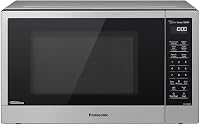
That matters for even heating, especially at lower settings like defrost. The Panasonic NN-SN686S pairs a 1200 watt inverter with a Genius Sensor that adjusts time and power by steam.
Its 1.2 cubic foot cavity and 14 preset options cover everyday reheating and cooking.
If you prefer no turntable, the Sharp SMC1174KS uses a flatbed interior that fits plates up to 13.25 by 13 inches. Its 1100 watt inverter spreads power across the cavity.
A flatbed changes how food sits, so read what a flatbed microwave is before you switch.
The Panasonic NN-SN67KS is another 1200 watt inverter option, with 16 sensor cook settings and a three-level popcorn button. Sensor cooking takes the guesswork out of reheat cycles.
Our explainer on what sensor cooking on a microwave is covers how it reads steam.
Inverter or traditional: which holds up better?
Inverter ovens keep more consistent power over their life, while traditional ovens are simpler and often cheaper. Traditional units cook with pulses of full power.
Inverter units run continuously and throttle down as needed.
The practical difference shows in texture and evenness. Inverter ovens tend to heat edges and centers more closely together.
Traditional ovens can leave the middle cooler on lower settings.
Neither type is immune to aging. An inverter magnetron still weakens over years.
But the steady output design means fewer hot spots while it works.
Budget matters too. Traditional microwaves cost less up front, so replacing one after a slowdown stings less.
Inverter models cost more but tend to deliver better results for the years you own them. If you are weighing the two layouts as well, our flatbed vs turntable microwave comparison covers the trade-offs.
What should you check before blaming the microwave?
Rule out the outlet and the loading first. A crowded circuit or a long extension cord can starve the oven of voltage and slow heating.
Try a dedicated wall outlet.
Then check how you load the food. A packed plate blocks the energy from reaching the center.
Spread food in a ring or stir it partway through.
Finally, look at the door seal. A seal that no longer closes flush loses energy and can cause uneven results.
Wipe the seal clean and close the door firmly to test it.
If the oven still heats slowly after those checks, the cause is inside the unit. That is when repair or replacement becomes the real question.
For anyone who bakes in theirs, our guide on whether you can bake a cake in a microwave oven shows how output affects results.
Bottom line
So do microwave ovens lose power over time? Yes, output fades as the magnetron and other parts age.
Longer cook times and uneven heating are the usual signs, and the decline is gradual rather than sudden.
Measure a water boil every few months to spot the change early. If the oven still heats safely, keep using it until the slowdown gets annoying.
Once it sparks, smells or takes far too long, replacement usually beats repair.
For a unit that keeps its power and heats evenly, the Panasonic NN-SN686S is the pick, with the Sharp SMC1174KS for flatbed fans and the Panasonic NN-SN67KS as a second sensor oven. Any of the three gives you steady inverter heating from day one.
Frequently asked questions
How can you tell if a microwave is losing power?
Watch your usual cook times. A bag of popcorn that once finished in 2 minutes taking 3 is a real sign.
Food heating unevenly or staying cold in the middle points to the same thing.
An inexpensive line-voltage test on the outlet can rule out a house wiring problem first.
What wears out first in a microwave?
The magnetron is the part that produces the microwaves, and it weakens gradually as it ages. High-voltage capacitors and the door seal also wear over time.
Any of these can reduce how much energy actually reaches the food.
Is a microwave still safe to use when it feels weaker?
A microwave that heats slowly but still heats is generally safe to use. Stop using it and have it checked if you see sparking, smell burning, hear loud buzzing, or notice a damaged door seal.
Those are real safety concerns rather than normal aging.
Can you fix a weak microwave instead of replacing it?
Sometimes, yes. Replacing a magnetron or capacitor is a job for a qualified repair technician, not a DIY project.
Factor in the part cost against a new unit.
On an older budget microwave, replacement usually makes more sense than repair.
Does a weaker microwave use more electricity?
It can, because longer cook times mean more minutes of running. A 1200 watt oven that has lost output may run noticeably longer to do the same job.
That adds up over a year of daily reheating.