8 Best Countertop Microwaves With Inverter Technology (November 2026)
The best countertop microwaves with inverter technology include the Panasonic NN-SN686S Stainless Steel Countertop/Built-In for everyday all-round cooking, the TOSHIBA Flatbed Microwave Oven with Inverter Technology for large or odd-shaped dishes, and the Panasonic NN-SN65KB Inverter Microwave for popcorn and snack nights.
On this page (5 sections)
The best countertop microwave oven with inverter technology for most kitchens is the Panasonic NN-SN686S, a 1200-watt 1.2 cu ft model with Genius Sensor cooking and 14 preset menus. Pick the TOSHIBA flatbed if you reheat rectangular dishes, or the Panasonic NN-SN75LB if your household cooks family-size portions.
Inverter technology changes how the magnetron delivers power. A standard microwave cycles full power on and off to reach a lower setting, while an inverter model holds a steady stream of power at every level.
That difference matters most when you defrost meat or reheat something delicate at 30 or 50 percent power. Panasonic says the steady delivery heats food evenly from edge to center without overcooking the outside.
At full power the gap narrows, which is why the choice between these ovens comes down to watts and cabinet size more than the inverter badge alone.
Every model below uses inverter heating, so the real choices come down to wattage, cabinet size and whether you want a turntable or a flat floor. Our Best Inverter Microwaves for Even Heating post covers the technology in more depth, and the countertop microwave ovens guide covers the wider field.
Our picks at a glance
-
1
 Best for everyday all-round cooking
Panasonic NN-SN686S Stainless Steel Countertop/Built-In
9.7/10 our score
See it on Amazon -
2
 Best for large or odd-shaped dishes
TOSHIBA Flatbed Microwave Oven with Inverter Technology
9.5/10 our score
See it on Amazon -
3
 Best for popcorn and snack nights
Panasonic NN-SN65KB Inverter Microwave
8.8/10 our score
See it on Amazon
- 4
 Check it
Panasonic NN-SN75LB 1.6 Cu Ft Inverter Microwave
Best for families and bigger meals - 5
 Best for small kitchens on a budgetCheck it
- 6
 Check it
Panasonic 1.2 Cu Ft 1250W Inverter Microwave
Best for fast reheating of full plates - 7
 Check it
Emerson 1.2 Cu Ft Inverter Microwave
Best for one-hand door operation - 8
 Check it
TOSHIBA Countertop Microwave Oven with Inverter
Best for big-batch and bulk cooking
The best inverter countertop microwaves for every kitchen
The Panasonic NN-SN686S is the strongest all-round pick, and each model below is the best choice for a specific need. Start with your largest dish and your busiest reheat job, then choose the cabinet that fits both.
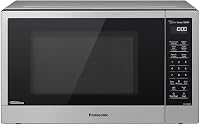
Panasonic NN-SN686S Stainless Steel Countertop/Built-In: Best for everyday all-round cooking
- 1200 watts and 1.2 cu ft
- Genius Sensor with 14 preset menus
- 13.4-inch turntable
- Inverter Turbo Defrost and Keep Warm
A 1200-watt inverter oven with sensor cooking and a turntable. It covers reheating, defrosting and keep-warm duty in one cabinet.
Pros
- Sensor cook and sensor reheat
- 14 preset menu items
- Keep Warm setting
Cons
- Child lock is enabled at purchase
- Turntable takes up interior space
This is the model to buy first if you want one oven that handles everything without much thought. The 1200-watt inverter core keeps power steady at all 10 levels, so a low setting for softening butter behaves differently from a pulse-on, pulse-off oven.
Genius Sensor cooking measures steam during the cycle and sets the remaining time, and the 14 preset menu items cover pizza, popcorn, pasta and oatmeal. Inverter Turbo Defrost speeds up thawing, and Keep Warm holds soups and gravies until you serve.
The 1.2 cu ft cabinet with a 13.4-inch turntable fits a dinner plate with room to spare. The interior measures roughly 10 by 14 by 14 inches, and the 20.7-inch width leaves a workable strip of counter beside it.
Panasonic rates this model for countertop or built-in use, and the stainless finish suits most kitchens.
Two trade-offs to know. The 25.5 lb cabinet is heavier than the compact models here, and the mandatory child lock is enabled when the oven arrives, so you'll release it before first use.
Buy it for the widest range of daily jobs in one oven.
TOSHIBA Flatbed Microwave Oven with Inverter Technology: Best for large or odd-shaped dishes
- 1.3 cu ft flatbed interior
- 1200 watts with inverter heating
- 11 smart sensor auto menus
- 11 power levels and mute function
No turntable means a flat floor that fits square containers and several plates at once. The sensor menus and 11 power levels cover most reheating jobs.
Pros
- Flatbed fits rectangular dishes
- Easy-clean smooth interior
- Mute function silences beeps
Cons
- No turntable to rotate food
- Black stainless finish only
TOSHIBA's flatbed model solves the problem a turntable creates: round plates fit, rectangular casserole dishes waste the corners. With no turntable, the whole 1.3 cu ft floor is usable, and you can set two plates side by side.
The flat floor also makes cleanup easier because there's no roller ring or glass plate to lift out. TOSHIBA says the inverter delivers even cooking, precise temperature control and quieter operation than a pulse cycle.
A humidity sensor backs that up by reading food moisture and setting power.
Eleven smart sensor menus detect food moisture and adjust power, and 11 power levels run from warming a beverage to cooking a full entree. A mute function silences the beeps if the oven sits near a living area.
Eco mode trims standby draw when the oven is idle.
The trade-off is rotation. A flatbed relies on the inverter's even field rather than turning the food, so very uneven loads may need a stir midway.
The Black Stainless Steel finish is also the only color offered. At 20.4 inches wide and 14.6 inches deep it fits the same counter strip as the Panasonic.
Buy it if odd-shaped dishes fill your fridge.
Panasonic NN-SN65KB Inverter Microwave: Best for popcorn and snack nights
- 1200 watts and 1.2 cu ft
- 3-level popcorn button
- 10 sensor cook settings
- 13.4-inch turntable in a small footprint
The same 1200-watt inverter core as the top pick, plus a popcorn button with three popping levels. A good fit for snack-heavy households.
Pros
- Three popcorn settings
- Sensor reheat and 15 auto cook options
- Keep Warm for up to 30 minutes
Cons
- Touch panel only
- Child lock ships enabled
If popcorn is a household ritual, this Panasonic earns its place. The 3-level popcorn button lets you pick the popping temperature and time for different bag sizes, which is more control than a single popcorn key gives you.
Under the surface it's the same 1200-watt inverter engine as the top pick, with Genius Sensor cooking and 10 sensor settings. Sensor reheat warms leftovers evenly, and 15 auto cook options cover oatmeal and omelets.
A quick-minute timer handles short bursts without dialing in a full program.
The 1.2 cu ft cabinet houses a 13.4-inch turntable but keeps a small external footprint, so it fits a tight counter run. Keep Warm holds gravies and rolls for up to 30 minutes.
Turbo Defrost runs on the same steady power, which matters most for dense foods like ground meat.
Against the NN-SN686S you gain a preset menu and the popcorn levels. The black finish is the only option, and the child lock also arrives enabled.
Buy it for snack-heavy kitchens where the popcorn button gets more use than the pizza key.
Panasonic NN-SN75LB 1.6 Cu Ft Inverter Microwave: Best for families and bigger meals
- 1.6 cu ft with 1250 watts
- Cyclonic Wave Inverter
- 20 preset smart cooking options
- Quick 30 and three-stage cooking
The largest Panasonic here, with the most presets and a Cyclonic Wave inverter. Built for casseroles and family-size portions.
Pros
- Largest capacity among the Panasonic picks
- 20 preset cooking options
- Three-stage cooking
Cons
- Heaviest and widest of the Panasonic picks
- Needs more counter depth
Family cooking calls for a bigger floor, and this Panasonic delivers the largest cabinet among the Panasonic picks. The 1.6 cu ft interior and 1250 watts handle casseroles and full dinner plates that crowd a 1.2 cu ft model.
Its Cyclonic Wave Inverter stirs the power pattern as well as holding it steady. Panasonic pairs that with 20 preset smart cooking options, the longest preset list in this roundup, covering fresh and frozen entrees, vegetables and rice.
Turbo Defrost and sensor reheat use the inverter's continuous delivery to thaw and warm food quickly. Dedicated buttons for popcorn, Keep Warm and Quick 30 sit on the keypad, and three-stage cooking lets you chain steps in one program.
That last feature is handy for a dish that needs defrost, then cook, then rest without you standing over the keypad.
The cost is footprint. At 32 lb and 21.9 inches wide with 19.4 inches of depth, this oven needs a deep, wide stretch of counter.
The control panel also carries more buttons than the smaller Panasonic models, so expect a short learning curve. Buy it if you cook for four or more and regularly reheat large containers.
FRIGIDAIRE Microwave Oven: Best for small kitchens on a budget
- 1.1 cu ft at 1000 watts
- Inverter heating
- 8 one-touch quick menus
- 10 power levels and child lock
The smallest and least powerful pick here, with one-touch menus for popcorn, pizza and vegetables. A sensible fit where counter space is tight.
Pros
- Compact 1.1 cu ft cabinet
- 8 one-touch menus
- 10 power levels
Cons
- Lowest wattage in this roundup
- Fewer presets than the Panasonic models
A small kitchen or dorm room doesn't need 1200 watts to reheat a mug of soup. This Frigidaire pairs inverter heating with a 1.1 cu ft cabinet, the smallest here, and still covers the basics with 8 one-touch menus for popcorn, pizza, vegetables, beverages, meat and bread.
The 1000-watt output is the lowest in this roundup, so a full dinner plate takes longer than on the Panasonic models. In exchange, the cabinet draws less power and takes less counter.
At 21.25 inches wide and 16 inches deep it fits tighter gaps than the 1.2 cu ft ovens.
Ten power levels and a removable glass turntable keep daily use simple, and the child safety lock adds peace of mind in a home with kids. Cook-by-weight and defrost-by-weight options help when you don't want to guess times.
A digital clock and kitchen timer round out the panel.
Skip it if you routinely reheat large casseroles or want sensor cooking, which this model doesn't include. Buy it for a first apartment or a secondary kitchen where quick snacks and beverages are the main job.
For lighter finishes in this class, see our white countertop microwave picks.
Panasonic 1.2 Cu Ft 1250W Inverter Microwave: Best for fast reheating of full plates
- 1250 watts and 1.2 cu ft
- Genius Sensor cooking
- Sensor reheat and Turbo Defrost
- Glass turntable and roller ring
A 1250-watt inverter oven in a 1.2 cu ft cabinet. The higher wattage shortens reheat times compared with the 1200-watt models.
Pros
- 1250 watts in a mid-size cabinet
- Sensor cook and sensor reheat
- Keep Warm and express cook buttons
Cons
- Child lock ships enabled
- Stainless finish only
Here's a way to get more power without a bigger cabinet. This Panasonic squeezes 1250 watts into a 1.2 cu ft body, so full plates and leftovers reheat faster than on the 1200-watt models while the footprint stays mid-size.
Genius Sensor cooking adjusts time and power from food moisture, and the sensor reheat and Turbo Defrost modes follow the same steady-power approach. The keypad includes Keep Warm and express cook buttons for quick jobs.
A one-touch beverage key covers the most common evening use.
The stainless steel exterior and easy-clean interior suit daily use. A glass turntable and roller ring come in the box.
At 24.9 lb it's lighter than the NN-SN686S, which helps if you move it between counters. Its 20.7-inch width and 15.8-inch depth match the other 1.2 cu ft Panasonic cabinets, so a shelf or counter cut for one fits the other.
The trade-off is preset range. This model lists fewer cooking programs than the NN-SN686S and the NN-SN75LB, so buyers who lean on auto menus have less to work with.
The child lock is enabled at purchase here too. Buy it when speed matters more than the longest menu list.
Emerson 1.2 Cu Ft Inverter Microwave: Best for one-hand door operation
- 1.2 cu ft at 1000 watts
- Push-open door with no handle
- 10 power levels and 8 presets
- Removable glass turntable
A push-open door lets you load the oven with one hand. The 1000-watt inverter core is fine for lighter reheating jobs.
Pros
- Push-open door with no handle to catch
- 8 pre-programmed settings
- 99-minute 99-second timer
Cons
- 1000 watts is modest for full meals
- Fewer preset menus than the leaders
The push-open door is the standout detail here. With no handle to grab, you can load the oven one-handed, which helps when you're holding a plate and reaching for the door at the same time.
The smooth front also wipes clean easily.
The 1.2 cu ft cabinet matches the Panasonic models for plate size, and the removable glass turntable lifts out for washing. Ten power levels and 8 pre-programmed settings cover defrosting and reheating.
A shortcut key row puts the most-used settings within one press.
Emerson's 1000-watt inverter core is the real limit. It's fine for snacks, beverages and plate reheating, but a large casserole will take noticeably longer than on the 1200-watt leaders.
The 99-minute 99-second timer gives you long cook times when you need them. The LED display stays readable in a dim kitchen.
At 20.4 inches wide and 15.7 inches deep it matches the compact group for footprint. The trade-off against the Panasonic 1.2 cu ft models is watts for the same cabinet size.
Buy it if the handle-free door fits your kitchen layout and your cooking stays in the everyday range. Skip it if you regularly reheat family-size portions and want the extra wattage.
TOSHIBA Countertop Microwave Oven with Inverter: Best for big-batch and bulk cooking
- 2.2 cu ft at 1200 watts
- Humidity sensor with 6 auto menus
- 16.5-inch removable turntable
- 10 power levels and child lock
The biggest cabinet in this group by a wide margin. The 2.2 cu ft interior and 16.5-inch turntable suit large families and bulk reheating.
Pros
- 2.2 cu ft interior
- 16.5-inch removable turntable
- Humidity sensor with 6 auto menus
Cons
- Widest footprint here by far
- Heaviest unit in this roundup
When the freezer is full and the whole family eats from the microwave, capacity wins. This TOSHIBA offers 2.2 cu ft, the largest cabinet in this roundup, with a 16.5-inch removable turntable that takes wide platters and multiple plates at once.
The humidity sensor reads moisture and adjusts power and time across 6 sensor cook and auto menus. TOSHIBA pairs the inverter with 10 power levels for everything from defrosting to boiling liquids.
The auto menus cover dinners, snacks and beverages, which keeps most jobs to a single button press.
At 1200 watts it matches the leaders on power, and the two-step child lock adds safety in a busy kitchen. The stainless steel finish suits a large family setup.
The clear drawback is size. At 24.4 inches wide, 19.5 inches deep and 33.5 lb, this oven needs a serious stretch of counter and is the hardest to move.
It also carries the lowest score here because the extra bulk comes with no gain in wattage over smaller rivals and a shorter sensor menu list than the Panasonic picks. Buy it only if capacity is your top priority.
How these inverter microwaves compare
The table below lines up the picks by capacity, wattage and interior type so you can see at a glance where each one fits. Use it to narrow the field before reading the write-ups in full.
| Product | Best for | Capacity | Wattage | Turntable | Our score |
|---|---|---|---|---|---|
| Panasonic NN-SN686S Stainless Steel Countertop/Built-In | everyday all-round cooking | 1.2 cu ft | 1200W | 13.4 in | 9.7 |
| TOSHIBA Flatbed Microwave Oven with Inverter Technology | large or odd-shaped dishes | 1.3 cu ft | 1200W | 9.5 | |
| Panasonic NN-SN65KB Inverter Microwave | popcorn and snack nights | 1.2 cu ft | 1200W | 13.4 in | 8.8 |
| Panasonic NN-SN75LB 1.6 Cu Ft Inverter Microwave | families and bigger meals | 1.6 cu ft | 1250W | Turntable included | 8.4 |
| FRIGIDAIRE Microwave Oven | small kitchens on a budget | 1.1 cu ft | 1000W | Removable glass turntable | 8.1 |
| Panasonic 1.2 Cu Ft 1250W Inverter Microwave | fast reheating of full plates | 1.2 cu ft | 1250W | Glass turntable | 7.9 |
| Emerson 1.2 Cu Ft Inverter Microwave | one-hand door operation | 1.2 cu ft | 1000W | Removable glass turntable | 7.2 |
| TOSHIBA Countertop Microwave Oven with Inverter | big-batch and bulk cooking | 2.2 cu ft | 1200W | 16.5 in | 7.1 |
How we chose these inverter microwaves
We compared specs and features against what most countertop buyers actually need: even reheating, sensible wattage for the cabinet size and controls that don't require a manual. Our score weighs specs, features and buyer feedback against what you're shopping for.
We started with inverter heating as the hard filter. Every model here uses a steady-power inverter rather than a pulse-on, pulse-off cycle.
From there we weighed wattage against cabinet size. A 1000-watt oven in a 1.1 cu ft body makes sense for a small kitchen, while a 2.2 cu ft cabinet at 1200 watts only earns its bulk if you cook in large batches.
We treated a 1200-watt oven in a 2.2 cu ft cabinet as a weaker match than the same wattage in a smaller box, because the extra volume is harder to heat evenly.
Sensor cooking and preset menus separated the leaders from the rest. Models with humidity or Genius Sensor cooking moved up because they remove guesswork from daily reheating.
We noted how many preset menus each model carries, since a longer list covers more of the foods people actually cook.
Finally we looked at practical details: turntable size, weight, door style, child lock and finish options. We favored models that fit common counter depths and that don't force you to choose between even heating and a workable footprint.
A 1.2 cu ft cabinet around 20 to 21 inches wide hit the sweet spot for most counters, and anything wider had to justify itself with real capacity or speed.
What should you check before buying a microwave oven with inverter technology?
Decide by wattage, cabinet size and interior type, in that order. Wattage sets how fast food heats, cabinet size limits what dishes fit, and turntable versus flatbed changes how you load the oven.
Match wattage to your heaviest reheat job. A 1000-watt oven handles snacks and beverages well.
For full dinner plates and casseroles, 1200 to 1250 watts shortens the cycle and reduces the chance of a cold center.
Measure your largest dish first. A 13.4-inch turntable takes a standard dinner plate.
A 16.5-inch turntable takes platters, but the oven needs a wider counter.
A flatbed frees the corners for rectangular containers.
Check the exterior dimensions against your counter. The smallest pick here is a 1.1 cu ft cabinet, and the largest is 2.2 cu ft at 24.4 in wide.
Leave the clearance the brand specifies around vents and the door swing.
Depth matters too: the family Panasonic needs nearly 19.4 inches, while the compact 1.2 cu ft models sit around 15.8.
Turntable or flatbed?
A turntable rotates food through the microwave field, which helps when the field isn't perfectly even. A flatbed relies on the inverter's steady delivery and gives you a flat floor for odd shapes and multiple plates.
Choose a turntable if you mostly reheat round plates and bowls. Choose a flatbed if rectangular takeout containers and square casserole dishes are common in your kitchen.
A flatbed also skips the roller ring, so there's one less part to clean or replace.
How much wattage do you need?
1000 watts covers everyday snacks, beverages and plate reheating. 1200 to 1250 watts heats full meals faster and gives you more headroom for dense foods like frozen casseroles.
Higher wattage isn't automatically better for everyone. A small kitchen with light use may prefer the lower power draw and smaller cabinet of a 1000-watt model.
Note the input figure as well as the output figure: the top Panasonic draws about 1480 watts from the outlet to produce 1200 watts of cooking power.
Do you need sensor cooking?
Sensor cooking is worth having if you reheat leftovers and defrost meat often. It reads steam or moisture and sets the time and power for you, which removes guesswork from foods that vary in size and water content.
Panasonic's Genius Sensor works this way, and TOSHIBA's humidity sensor does the same job.
Preset menus are useful but simpler: they run a set program for popcorn, pizza or vegetables. Many models include both, and the Panasonic picks here pair Genius Sensor cooking with long preset lists.
Should you consider a built-in setup?
Only buy a model rated for built-in installation if you plan to surround it with cabinet. The Panasonic NN-SN686S is described as countertop or built-in.
Leave the ventilation clearance the brand specifies around the cabinet.
Built-in models cost more to install and are harder to replace later. For most renters and small kitchens, a freestanding countertop oven is the simpler and cheaper route.
Check the door swing against nearby cabinet doors before you commit.
What do you give up with the largest cabinet?
A 2.2 cu ft oven gives you room for platters and several plates, but the bulk costs you counter depth and makes the unit heavier to move. The same 1200 watts has more air to heat in a bigger box.
Buy large only when you regularly cook in bulk.
The verdict: which inverter countertop microwave should you buy?
For most kitchens, buy the Panasonic NN-SN686S. It pairs 1200 watts with Genius Sensor cooking, 14 preset menus and a 13.4-inch turntable in a 1.2 cu ft cabinet that fits a standard counter.
Choose the TOSHIBA flatbed if rectangular dishes and multiple plates are your norm. Pick the Panasonic NN-SN75LB for family-size cooking, the NN-SN65KB for popcorn nights, or the Frigidaire and Emerson when space and power draw matter more than wattage.
The NN-SN67QS sits in between when you want 1250 watts without giving up counter space.
If you're still weighing the technology itself, read our inverter microwave guide and the turntable question answered. Whichever model you pick, a microwave oven with inverter technology gives you steadier heat at low settings than the pulse-on, pulse-off oven it replaces.
Our top 3 picks at a glance
-
1
Best for everyday all-round cooking
Panasonic NN-SN686S Stainless Steel Countertop/Built-In
9.7/10 our score
See it on Amazon -
2
Best for large or odd-shaped dishes
TOSHIBA Flatbed Microwave Oven with Inverter Technology
9.5/10 our score
See it on Amazon -
3
Best for popcorn and snack nights
Panasonic NN-SN65KB Inverter Microwave
8.8/10 our score
See it on Amazon
Frequently asked questions
What does inverter technology actually change in a microwave?
An inverter microwave oven with inverter technology delivers steady power at any level instead of switching the magnetron fully on and off. Panasonic says that steady stream heats food more evenly from edge to center, especially when defrosting or reheating delicate foods at lower settings.
Do inverter microwaves still have a turntable?
Most do, but not all. Panasonic and Emerson models here use a glass turntable, while the TOSHIBA flatbed model has a fixed floor.
Read our guide to whether inverter microwaves have turntables for the full comparison.
Is a higher wattage inverter microwave always better?
Not always. 1200 to 1250 watts shortens reheat times for full plates and casseroles.
A 1000-watt inverter oven like the Frigidaire or Emerson still handles everyday snacks and beverages and takes less power.
What is the difference between sensor cooking and preset menus?
A sensor reads steam or moisture and adjusts time and power on its own. A preset menu runs a set program for foods like popcorn or pizza.
Many inverter models include both, and the Panasonic picks here pair Genius Sensor cooking with 10 to 20 presets.
Can an inverter microwave be built into a cabinet?
Only if the model is rated for built-in installation. The Panasonic NN-SN686S is described as countertop or built-in.
Check the model's installation guidance and leave the clearance the brand specifies around the cabinet before you build it in.
Why does my new inverter microwave arrive with the child lock on?
U.S. countertop microwaves ship with the child lock enabled as a safety default. Panasonic and TOSHIBA models here require you to release it before first use.
The instructions in the box and on the product page show the button sequence.