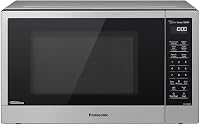
How Deep Is a Countertop Microwave?
A countertop microwave is usually 12 to 20 inches deep, and most fall between 13 and 18 inches front to back. Compact models sit near the low end, while larger units run closer to 18 inches.
On this page (8 sections)
- How deep is a countertop microwave by size class?
- Why does microwave depth vary between models?
- What do real countertop microwaves measure front to back?
- How do you measure your counter for a microwave?
- What clearance does a countertop microwave need?
- Does a deeper microwave mean a bigger interior?
- Will a deep countertop microwave fit your kitchen?
- Which depth should you pick for your counter?
A countertop microwave is usually 12 to 20 inches deep, and most sit between 13 and 18 inches front to back. Compact models land near the low end, while larger units run closer to 18 inches.
Depth decides whether the microwave fits your counter without hanging over the edge. It also shapes how much room you keep in front for plates and your hands.
The exact figure depends on capacity and on how thick the back panel is.
How deep is a countertop microwave by size class?
Depth grows with capacity, but not in a straight line. A 0.7 cubic foot compact often measures around 13 inches deep, while a 1.1 or 1.2 cubic foot unit runs closer to 16 to 18 inches.
The extra inches buy a bigger cavity and turntable.
Two microwaves with the same capacity can still differ by an inch or more. A thicker back panel or a deeper control housing adds exterior depth without adding usable space inside.
Measure the usable depth of your counter, not just the full slab. Trim, a backsplash lip or a raised edge behind the counter all reduce how far back the unit can sit.
A short counter that looks roomy on paper can end up crowding the door swing once the plug and vent gap are subtracted.
Why does microwave depth vary between models?
Interior cavity size is the main driver, but the door and back panel matter too. A microwave needs room behind the cavity for the magnetron, vents and wiring.
That housing can be shallow or deep depending on the brand's design.
The door adds depth at the front. A curved or thick door pushes the exterior measurement out, even when the cavity matches a rival's.
Handles that stick out add more.
The power cord and plug also need space. A plug that sits straight back needs clearance behind the unit, while a flat or side-exit cord needs less.
Vent placement changes things as well. A model that vents through the back needs a wider gap behind it than one that pushes air out the top or sides.
What do real countertop microwaves measure front to back?
Three common sizes show how depth tracks capacity. These numbers are the exterior depth of the cabinet, so use them as a starting point for your counter check.
The Frigidaire runs 16 inches deep with a 1.1 cubic foot cavity. The Farberware measures 17.3 inches deep at 1.2 cubic feet.
The Chefman compact comes in at 12.93 inches deep at 0.7 cubic feet.
How deep is the Chefman 0.7 cu ft model?
The Chefman measures 12.93 inches deep, 17.52 inches wide and 9.53 inches tall. That makes it the smallest of the three and the easiest to slide onto a short counter.
Its 700 watts and 10 power levels cover everyday reheating. The small cavity suits mugs, bowls and single plates rather than a full dinner plate.
The compact frame fits tight kitchens and dorm desks. Check that a dinner plate clears the turntable before you rely on it for full meals.
The handle lock is also worth noting on a small unit, since the door sits close to the counter edge where hands brush past.
How deep is the Farberware 1.2 cu ft model?
The Farberware is 17.3 inches deep, 20.5 inches wide and 12.8 inches tall. It has the deepest body and the largest cavity of the three.
The 1.2 cubic foot interior and 1000 watts suit family meals and bigger dishes. Ten power levels and six one-touch options cover popcorn, potato and pizza.
Defrost by weight or by time is there too, along with a memory function that saves a favorite setting.
Measure your counter's usable depth before choosing this size. A 24 inch counter leaves about 6.7 inches in front for plates and your hands.
The 12.8 inch height is the lowest of the three, so it clears more upper cabinets even though it runs deepest front to back.
How deep is the Frigidaire 1.1 cu ft model?
The Frigidaire measures 16 inches deep, 21.25 inches wide and 18 inches tall. It sits between the other two in depth and leans tall, so check overhead clearance.
Its inverter technology delivers steady power for cooking and defrosting. The 1.1 cubic foot interior and 1000 watts handle snacks and family meals.
Ten power levels, a removable glass turntable and eight one-touch menus fill out the controls.
The extra height matters more than depth under upper cabinets. Leave room above the top vents so heat can escape.
At 18 inches tall, this is the model most likely to bump a low cabinet before its depth becomes the problem.
How do you measure your counter for a microwave?
Measure the usable depth from the wall or backsplash to the front edge, then subtract clearance. Allow 2 to 4 inches behind the unit for vents and the cord.
Leave at least a few inches in front so the door swings and plates clear the edge.
Write down three numbers: usable depth, width and the clearance under upper cabinets. Depth alone won't tell you if the unit fits.
The width matters just as much on a narrow counter run, and the Frigidaire's 21.25 inch width is the widest of the three.
Check the door swing too. A door that opens past the counter edge can hit a wall or a fridge.
Note which side the hinge sits on and whether the door opens left or right. A door that swings into a walkway is a daily annoyance, even when the depth fits fine.
What clearance does a countertop microwave need?
Leave 2 to 4 inches behind the microwave and keep the top and sides clear. Vents pull in and push out air, so a unit pressed against a wall or cabinet runs hotter.
The cord and plug need room as well. A plug that bends sharply against a backsplash can loosen over time.
A flat plug or a side exit helps on shallow counters. Check where the outlet sits before you slide the unit back, since an outlet in the middle of the backsplash can block more depth than the vent gap alone.
Check the height gap under upper cabinets. A tall model like the Frigidaire needs more headroom than a low compact.
Warm air rises from the top vents, so don't box it in. A mute button also matters in a shared kitchen, since you can silence beeps without giving up the safety lock.
Does a deeper microwave mean a bigger interior?
Not always. Interior depth and exterior depth are different numbers.
A thick back housing can add an inch to the outside without adding usable space inside.
Compare the cavity and turntable size, not just the exterior depth.
A large turntable is the better sign of usable space. It tells you what plates and dishes will spin without scraping the walls.
The Farberware's 1.2 cubic foot cavity fits more than the Chefman's 0.7 cubic foot one, and its exterior depth is 4.37 inches more.
If you mostly reheat mugs and bowls, the shallow Chefman gives you counter room back. If you cook full meals, the deeper Farberware earns its footprint.
The interior materials differ too: the Farberware uses stainless steel inside, while the Chefman combines stainless steel and glass.
Will a deep countertop microwave fit your kitchen?
It depends on your counter depth and the space in front. A 24 inch counter is a common kitchen standard.
An 18 inch deep microwave leaves about 6 inches in front, which is workable for a compact unit.
A 17.3 inch model like the Farberware leaves more room on the same counter. On a 20 inch counter, that same unit leaves under 3 inches in front, which gets cramped for plates and your hands.
None of the three models here reach 20 inches, but the margin still shrinks fast as depth grows.
Check the overhang too. A counter with a lip or a raised edge behind it reduces usable depth.
So does a wall outlet that sits proud of the backsplash. If your counter is short, pick a shallow unit or look at rated small countertop microwaves that keep the footprint tight.
Which depth should you pick for your counter?
Pick the deepest unit your counter can hold with clearance to spare, then size the cavity to your cooking. A 24 inch counter handles a 17 to 18 inch deep model well.
A 20 inch counter suits a compact near 13 inches deep.
For most kitchens, the Farberware balances a 1.2 cubic foot cavity with a 17.3 inch depth. If counter room is short, the Chefman at 12.93 inches deep fits without crowding the front edge.
The Frigidaire at 16 inches deep splits the difference and adds inverter cooking. Its 18 inch height is the trade-off, so measure upward as well as back.
Work through how to choose a microwave for capacity and features, then check depth last. If you want a bigger cavity, see large countertop microwaves and confirm the depth first.
For a light finish that hides fingerprints on a busy counter, compare white countertop microwaves.
The answer to how deep a countertop microwave is runs from about 13 to 18 inches on the models here, so measure your counter before you choose. Leave clearance behind and in front, and match the cavity to the meals you cook.
Frequently asked questions
How deep is a typical countertop microwave?
Most countertop microwaves are 13 to 18 inches deep. Compact 0.7 cubic foot models often land near 13 inches, and larger 1.2 cubic foot units run closer to 17 inches.
Measure your counter's usable depth before you order.
Does a microwave's depth include the door handle?
The depth figure measures the cabinet from front to back, and a protruding handle can add an inch or two. Allow extra room behind the counter edge so the handle, vent and power cord have space and the door can open fully.
How much counter depth does a countertop microwave need?
Leave at least 2 to 4 inches of clearance behind the microwave for vents and the cord, plus space in front for the door swing. If your counter is 24 inches deep, a microwave 18 inches deep or less leaves usable room to work.
Can a deep countertop microwave fit under upper cabinets?
Depth matters less than height here. Check the cabinet's underside clearance against the microwave's height, keep the top vents clear, and confirm the door opens past the cabinet edge before you commit.
Does a deeper microwave hold bigger dishes?
Not always. Interior depth matters more than exterior depth.
A large turntable and a deep cavity fit bigger plates, but a thicker back panel can eat exterior depth without adding usable space inside.