Conventional Oven vs Microwave Oven: Which to Use? (November 2026)
Use a microwave oven for speed and a conventional oven for browning, texture and volume. The conventional oven vs microwave oven choice comes down to what you're cooking and how much time you have.
On this page (10 sections)
- Conventional oven vs microwave oven: what actually differs?
- How fast is each appliance?
- Which one browns and crisps better?
- Which one cooks food more evenly?
- How much food can each one hold?
- Which fits a small kitchen?
- Which is simpler to use day to day?
- Who should buy which?
- How we scored these picks
- Verdict: which should you use?
Use a microwave oven for speed and a conventional oven for browning, texture and volume. The conventional oven vs microwave oven choice comes down to what you're cooking and how much time you have.
These two appliances handle different jobs. A microwave heats food fast and keeps it moist, while a conventional oven surrounds food with dry heat and browns it.
Most kitchens benefit from having both. The short answer for most readers: reach for the microwave for reheats, drinks and defrosting.
Switch to the conventional oven when you want crispy edges, roasted flavor or a full tray of food cooked evenly.

 Best for real oven cooking
Breville BOV900BSS Smart Oven Air Fryer Pro
Conventional oven vs microwave oven: what actually differs?
The main difference is how each one heats food. A microwave uses microwaves to agitate water molecules inside the food, so the food heats from within.
A conventional oven heats the air and surfaces around the food, so it cooks from the outside in.
That changes texture, speed and what you can cook. Microwaves are quick and keep moisture in.
Conventional ovens brown and crisp, and they can hold large trays.
Here's how the three products in this comparison line up on the basics.
| Product | Best for | Capacity | Output power | Size (W x D x H) | Our score |
|---|---|---|---|---|---|
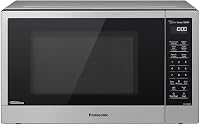
| TOSHIBA Countertop Microwave Oven | everyday reheating | 1.2 cu ft | 1000W | 20.6 x 14.6 x 11.8 in | 9.6 |
| Breville BOV900BSS Smart Oven Air Fryer Pro | real oven cooking | 1 cu ft | 21.5 x 17.5 x 12.7 in | 9.6 | |
| Chefman Countertop Microwave Oven 0.7 Cu. Ft. | small kitchens | 0.7 cu ft | 700W | 17.52 x 12.93 x 9.53 in | 9.5 |
The Toshiba and Chefman are microwaves; the Breville is a countertop convection oven. The Breville's convection fan moves hot air for faster, more even roasting than a plain conventional oven.
How the heating methods differ
A microwave's energy penetrates food and heats the water in it. That's why a bowl of soup warms in two minutes, but a pizza comes out soft instead of crisp.
A conventional oven heats air, walls and racks. Heat reaches the food's surface first, then moves inward.
That's what creates browning and a crust.
The Breville's five quartz elements and Element iQ system steer power where it's needed. Super convection pushes a greater volume of hot air for even roasting and air frying.
What each one does best
Microwaves win on speed. The Toshiba's 1000 watts and humidity sensor adjust time and power automatically for reheats.
The Chefman's one-touch express cook starts full power in seconds.
Conventional ovens win on results. The Breville bakes, broils, air fries, roasts and dehydrates across 13 functions, with an interior light so you can watch browning.
How fast is each appliance?
The microwave is far faster for small portions, but the gap narrows with volume. A reheat that takes two minutes in a microwave can take 20 or more in a conventional oven once you count preheating.
That speed comes from direct heating. A microwave doesn't need to warm a whole cavity first.
A conventional oven must preheat its interior and racks before food goes in.
Microwave speed in practice
The Toshiba's sensor cooking cuts guesswork. It reads humidity and adjusts time and power, so a plate of leftovers or a bowl of vegetables heats without you setting minutes by feel.
The Chefman's express cook starts full power with a single press of its number keys. For a mug of coffee or a quick snack, that's hard to beat.
Conventional oven speed in practice
The Breville preheats and then cooks with steady dry heat. Its super convection reduces cooking time by up to 30% compared with regular convection on some foods.
That matters for roasted vegetables and air-fried fries.
For a single serving, the preheat is often longer than the cook. That's why the microwave stays the better tool for one plate.
For a family meal or a full tray, the oven's slower start pays off in volume.
Which one browns and crisps better?
The conventional oven wins clearly here. Dry, moving heat browns surfaces and drives off moisture, so food develops color and crunch.
A microwave leaves surfaces pale and soft.
If you want roasted potatoes with crisp edges, a pizza with a browned crust or cookies with a golden top, the conventional oven is the right tool. The microwave can't produce that result.
Why microwaves don't brown
Microwave energy heats moisture throughout the food. Steam stays trapped, so surfaces stay damp and soft.
Some microwaves offer a browning element or a crisper pan, but neither product here does.
The Chefman's presets cover pizza and popcorn, but those settings reheat and pop rather than crisp. A microwaved pizza slice comes out warm and limp.
What the Breville adds for browning
The Breville's broil and air fry functions use high heat and strong airflow. The mesh basket and two oven racks let hot air reach all sides of the food.
That's how air-fried fries come out golden rather than steamed.
Its 13 functions include toast, bagel, broil, bake, roast, pizza and cookies. Each one uses dry heat tuned to that food, so browning happens the way you expect from a full oven.
Which one cooks food more evenly?
Both can cook evenly, but they do it in different ways. A microwave needs a turntable or stirrer to spread energy, while a conventional oven relies on steady air temperature and airflow.
The Toshiba includes a 12.4-inch glass turntable that rotates food through the microwave field. That helps prevent hot and cold spots in a plate or bowl.
The Chefman also uses a glass turntable.
The Breville's Element iQ system and digital temperature control aim to eliminate cold spots. Five independent quartz elements adjust power across the cavity for precise, even cooking.
Where microwaves struggle
Thick or dense foods can heat unevenly in a microwave. A large baked potato may come out hot at the edges and cool in the center unless you turn it or let it stand.
The Toshiba's sensor helps by adjusting time and power, but standing time still matters. Let food rest a minute or two after the beep so heat can spread through.
Where conventional ovens shine
A conventional oven's steady air temperature cooks a full tray more uniformly. The Breville's 16 x 13.5 x 7 inch interior fits nine slices of bread or a 14-pound turkey, so large items cook at one temperature throughout.
Its interior light turns on at the end of the cycle so you can check browning without opening the door. That helps you catch the moment food is ready.
How much food can each one hold?
The conventional oven handles far more volume, while the microwave suits single portions and small dishes. That capacity gap decides which appliance you use for family meals.
The Breville's interior measures 16 x 13.5 x 7 inches and holds a 14-pound turkey, a 5-quart Dutch oven or a 12-cup muffin tray. The Toshiba holds 1.2 cubic feet on a 12.4-inch turntable.
The Chefman holds 0.7 cubic feet.
Microwave capacity in practice
The Toshiba's 1.2 cubic feet fits a dinner plate, a large bowl or a casserole dish. That covers most reheating and defrosting jobs for a small household.
The Chefman's 0.7 cubic feet suits mugs, bowls, small plates and single servings.
Neither microwave fits a full sheet pan or a whole bird. If your meal fills a large tray, the conventional oven is the tool you need.
Conventional oven capacity in practice
The Breville fits most 9 x 13 inch pans and 12-cup muffin trays. That's enough for a family casserole, a batch of cookies or a tray of roasted vegetables.
It also holds a 14-pound turkey for holiday cooking.
For everyday single servings, that capacity is more than you need. The oven takes longer to preheat and uses more energy for a small job.
That's where the microwave earns its counter space.
Which fits a small kitchen?
A compact microwave fits almost anywhere, while a conventional oven needs more counter depth and clearance. Measure both before you decide.
The Chefman's frame measures 17.52 x 12.93 x 9.53 inches. That's compact enough for a short counter or a shelf beside other appliances.
The Toshiba measures 20.6 x 14.6 x 11.8 inches, still countertop-friendly but wider.
The Breville measures 21.5 x 17.5 x 12.7 inches. It's deeper and needs more room behind it, and its dropdown door needs clear space in front.
That's the trade-off for its larger cooking space.
When space decides for you
If your counter is short on depth, a microwave like the Chefman or Toshiba is the practical choice. You can still bake and roast in a full kitchen oven when you need to.
If you live without a full oven, the Breville can stand in for one on a deep counter. It covers baking, roasting, broiling and air frying, so you don't lose those jobs.
Just confirm the clearance for its door and vents.
Which is simpler to use day to day?
The microwave is the simpler tool for quick jobs, while the conventional oven asks for preheating and attention. That simplicity is why most people reach for the microwave first.
Microwaves have one-touch starts, preset menus and short cook times. Conventional ovens need preheating, a rack position and often a check partway through.
Microwave controls
The Toshiba uses touch controls with six preset menus and ten power levels. Its one-touch start runs full power from one to six minutes.
The Chefman has six presets, ten power levels and a +30 seconds button, plus a mute option and child safety lock.
Both are easy to run without a manual. That's part of why they fit into daily routines so well.
Conventional oven controls
The Breville uses an LCD display and knob control. It shows when preheating finishes and counts down the remaining time.
Its 13 functions mean more choices to learn, but each is a preset for a food type.
The interior light lets you check progress without opening the door. The included accessories, such as the pizza pan and broil rack, each suit specific functions.
It asks more of you, and it gives more control in return.
Who should buy which?
Buy a microwave as your default for speed; buy a conventional oven when browning and volume matter. Most kitchens end up with one of each, but your cooking style decides which comes first.
The Toshiba is the best microwave pick here for most homes. Its 1.2 cubic feet and 1000 watts handle family reheats and defrosting, and its humidity sensor takes the guesswork out of time and power.
The Breville is the pick when you want real oven results on the counter. Its 13 functions and super convection cover baking, roasting and air frying, so it replaces several appliances at once.
The Chefman suits small kitchens and light use. Its 0.7-cubic-foot frame and one-touch express cook make it an easy fit where counter space is tight.
Pick the microwave if you mainly reheat
Choose the microwave if most of your cooking is reheating leftovers, warming drinks, steaming vegetables or defrosting. The Toshiba's sensor and presets make those jobs fast and consistent.
A microwave also suits anyone who wants one-button operation and doesn't need browning. If you already have a full oven in the kitchen, a countertop microwave fills the speed gap without taking much room.
Pick the conventional oven if you bake and roast
Choose the conventional oven if you bake bread, roast meat and vegetables, air fry or cook for several people at once. The Breville's dry heat and convection give you browning and even results a microwave can't match.
It also suits a kitchen without a full oven, or a second cooking space for holidays and batch cooking. The trade-off is slower preheating and more counter depth.
Consider both when your kitchen allows it
A small kitchen can often fit a compact microwave beside a countertop oven. That pairing covers speed and browning without a full range.
The Chefman's small frame leaves more room for a second appliance.
Check the power draw before running both at once. The Breville pulls up to 1800 watts and the Toshiba 1600 watts input.
If your circuit is shared, stagger their use.
How we scored these picks
Our score weighs specs, features and buyer feedback against what you're shopping for. We compared output power, capacity, cooking modes and controls against each other for this comparison.
The Toshiba scores 9.6 for its sensor cooking, ten power levels and 1.2-cubic-foot capacity. The Breville also scores 9.6 for its 13 functions and convection performance.
The Chefman scores 9.5 as a compact, easy-to-use microwave for small spaces.
Scores reflect fit for this comparison, where speed and browning both matter. A microwave-only shopper would weigh the two microwaves differently.
For more detail on power, see our guide to how many watts a microwave uses.
If you're shopping for a microwave on its own, our roundup of the best countertop microwave ovens covers more options. Curious about a turntable-free design?
Read what a flatbed microwave is.
Verdict: which should you use?
Use the microwave for speed and the conventional oven for browning, texture and volume. That split is the practical answer to the conventional oven vs microwave oven question for most kitchens.
The Toshiba is the best microwave pick here for everyday reheating and defrosting. It combines 1000 watts, a humidity sensor and a 1.2-cubic-foot cavity that fits family plates.
The Breville is the best pick when cooking quality matters more than speed. Its 13 functions and super convection deliver browned, crispy results a microwave can't match.
If counter space is tight and you mostly reheat, the Chefman is the compact pick. If you bake and roast regularly, the Breville earns its deeper footprint.
Most readers will want one of each, starting with the microwave that matches their counter and the oven that matches their cooking.
Frequently asked questions
Is a microwave oven faster than a conventional oven?
Yes. A microwave heats food directly and often finishes a reheat in a couple of minutes, while a conventional oven needs to preheat and cook by surrounding heat.
For speed on leftovers and drinks, the microwave wins; for browning and texture, the conventional oven does.
Can a microwave oven replace a conventional oven?
No. A microwave reheats, defrosts and steams well, but it doesn't brown, crisp or roast the way a conventional oven does.
Most kitchens keep both, since each does jobs the other handles poorly.
What does the conventional oven vs microwave oven comparison say about texture?
Conventional ovens win on texture. Dry heat browns surfaces and crisps edges, so roasted vegetables, pizza and baked goods come out the way you expect.
Microwaves heat moisture in the food, which keeps things soft but leaves surfaces pale and sometimes rubbery.
Does a microwave use less power than a conventional oven?
A microwave draws more power while running, but it runs for far less time. A 1000-watt microwave heating a plate for 2 minutes uses less total energy than a conventional oven preheating and baking for half an hour.
Short jobs favor the microwave; long bakes favor the oven.
Which should I use for defrosting frozen food?
The microwave, set to a defrost cycle. Its rapid, low-power heating thaws food in minutes, while a conventional oven would start cooking the outside before the center thaws.
Move the food to the oven afterward if you want browning.
Can I put microwave-safe dishes in a conventional oven?
No. Most microwave-safe plastic containers can't take conventional oven heat and will warp or melt.
Check each dish's own temperature rating, and use metal or oven-safe glass in the conventional oven instead.